

Arizona
Fighting Mega-fires by Restoring Arizona’s Forests. Four Arizona forests are part of a massive forest health initiative.
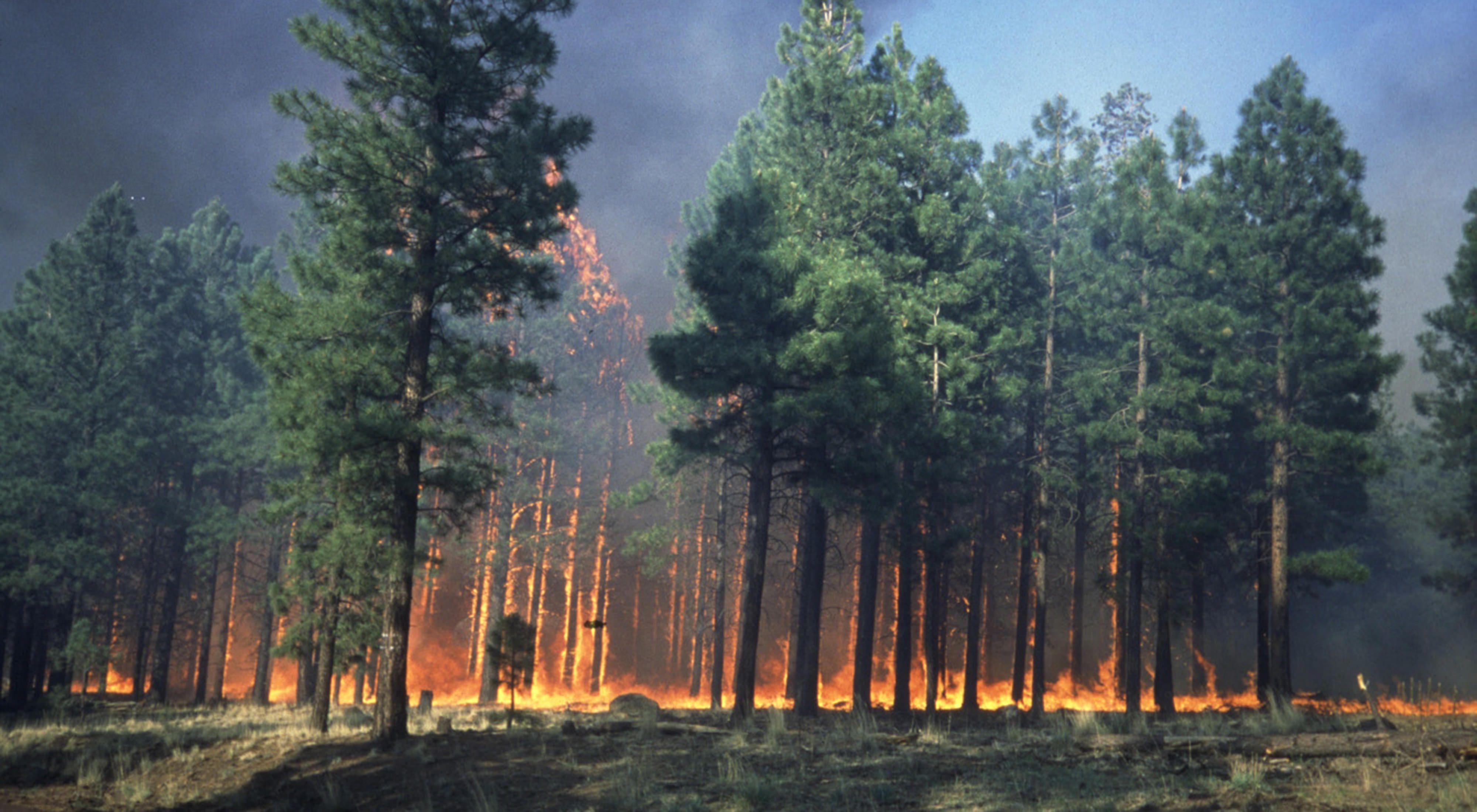
Fire is a natural process, but Arizona’s forests are not in a natural state. Years of fire suppression and drought have ushered in the era of the mega-fire, as the Southwest experienced recently with the Wallow and Monument fires.
Arizona’s forests need help now. The Four Forest Restoration Initiative, modeled after the White Mountains project, will thin 300,000 acres of trees in the next decade, and nearly 1 million acres in all. It’s the largest forest restoration project in the nation and involves many public and private partners, including the Conservancy.
The Conservancy and its partners in the effort are working to employ long-term forest harvesting contracts, which would allow time to develop local markets for the wood products and provide economic benefits to local communities. The effort will also strive to reduce Forest Service costs of flagging trees for cutting, and instead, train wood harvesters to make those decisions – using approaches that don’t harm sensitive habitats like streams and wildlife corridors.
Technology–Enhanced Wood Harvesting
The Nature Conservancy and its partners are creating innovative uses of technologies to more efficiently harvest trees.
- With the use of in-cab GPS, wood harvesters ensure the right treatment in the correct location, they track the date, time and location of a tree cut to better manage project contracts.
- The use of bar codes is being explored to follow trees from cut to wood product manufacturing.
- Infa-red can be used to measure where foliage begins and the density to design the thinning patterns.
- Training is being developed so harvesters can see real-time, using iPad technology, the cuts they are making to create the prescribed forest landscape.